

Many snowbirds buy a second home in Florida for a more comfortable place to stay while on vacation, as a potential retirement spot, and because rising property values can make it a sound investment. They might also plan on renting it out part of the time while they’re not there, to offset some of the costs of ownership.
When a property is rented out year-round, either for short or long-term tenants, it becomes an investment property that’s subject to different lending and tax requirements than a second home would have.
There are many things to consider when buying a second home or an investment property in Florida, and we help our customers with that decision all the time.
In this Florida investment property guide, we’ll examine the differences between a second-home and an investment property, the financial implications of each option, and what you need to know to make the right decision.
A Second Home VS Investment Property in Florida
How the IRS Defines Each Property Type
Whether you buy a property as a second home or as an investment has a significant impact on your income tax deductions and property taxes. Some people buy a second home to serve as a vacation home and rent it out when they’re not there. For the IRS, a second home is a place you stay for at least 14 days per year.
Your primary residence is where you live most of the time. It’s also the address on your driver’s license, vehicle registration, voter registration, and federal income tax returns.
A secondary home is where you spend at least two weeks per year and might rent it out part of the time. An investment property is purchased solely for the rental income and appreciation in property values that it could provide.

IRS Rules That Influence Tax Treatment
The IRS rule on renting residential and vacation properties is if you use a property for more than 14 days per year or 10% of the rental period, whichever is longer, the property is considered a second home. Otherwise, it’s considered an investment property.
Personal use could be defined as yourself, as well as friends or family members that you let stay there for free without using it as their main residence. It can also include someone that you trade personal dwellings with, such as letting them stay for a week at your second home in Florida, so you can spend a week at their place somewhere else.
The IRS has more information on home mortgage interest deductions and how to determine whether a residential property qualifies.
Tax Deductions and Rental Income Rules
With an investment property that’s bought solely for rental use, you can deduct some of your rental expenses from your gross rental income on your federal income taxes.
These costs typically include your mortgage interest, real estate taxes, and rental expenses such as advertising and hiring a leasing agent or property manager. You may also need flood insurance, and you can check a property’s flood risk at FEMA’s Flood Map Service Center.
If you rent a second home out part of the time, you would need to allocate your expenses based on the number of days it’s used for each purpose. For any property that’s rented for 14 days or more per year, the income is taxable and must be declared on your income taxes.
If you sell a second-home or an investment property, your profits could be subject to the federal capital gains tax based on how long you owned the property, whether it’s a second-home or a rental property, and your income level. Primary residences are exempt from the capital gains tax.

Key Questions to Ask Yourself Before Buying a Second Home in Florida
We recommend considering your current and future needs before looking for your second home. These include:
-
-
- What kind of location will best meet your needs? Do you want something near the water? Close to shopping and an airport? What are your recreation needs? Do you want a place where the amenities are within walking distance?
- What type of property do you need? Do you prefer the privacy of a single-family home or would a condominium unit work for you?
- What will the maintenance and upkeep be on your second home, and is there security on site? What sort of amenities are available?
-
Costs, Financing, and HOA Considerations
Probably the biggest considerations in buying a second home will be the down payment, financing the mortgage, and expenses such as utilities, maintenance, property insurance, and taxes.
If the property is part of a homeowners association (HOA) you’ll have monthly fees to pay, and there could be restrictions on the use of the home, such as the types of pets you’re allowed to have, whether you could rent it out, and how often you could do so.
There could be limits on how many guests can visit you each year, how long they can stay, and the amenities they can access.
If you buy a home in a retirement community, there could be a minimum age requirement for those who live there, and it may require at least one spouse or partner to be at least 55 years old.
Children less than 18 years old are typically not allowed to live in retirement communities, and there could be restrictions on how many days per year they’re allowed to visit.
Second-Home Mortgage Requirements
Loans for second homes in Florida typically require higher down payments and have higher interest rates than those for primary residences. A down payment requirement would typically be around 10% to 20% and borrowers usually need a credit score of around 640 to 680.
Mortgage interest on second homes is typically tax-deductible, as long as you comply with IRS regulations. Second homes are not eligible for federally-backed mortgages from the FHA, VA, and USDA. The second home must be located at a reasonable distance from the primary home.
Insurance Considerations
Your ability to obtain a mortgage for a second home depends on many of the same factors required for primary homes, with some added restrictions. As mentioned above, the second home must be occupied by the borrower for at least two weeks per year, it must be a single-family home or an individual condominium unit, suitable for year-round occupancy, with the borrower having exclusive control over who resides there.
In other words, you couldn’t have a third party managing or approving any rentals of the property. You might also be barred from allowing any rentals for a given period after you buy the home.
Whatever property insurance you have on your primary home, you’ll probably need a separate policy for your second home. Property insurance for second homes is priced differently that for primary homes.
Apart from any risks for that location, from severe weather or flooding, second homes are considered to face a higher risk of burglary and vandalism. This could result in higher premiums, reduced coverage, or a higher deductible for these risks. Any exterior amenities, such as a swimming pool, deck, dock, or detached garage, could also face reduced coverage and have a separate deductible. If you plan on leasing your second home for any amount of time, make sure it’s allowed by your property insurance.
Of course, any security features the property has, such as alarms or security provided by an HOA, would help reduce your premium costs—and some insurance providers require some kind of security measures for second homes.
Florida Second-Home Tax Laws
Florida does not have a state income tax, but you would have to pay local property taxes on your second home. Second homes do not qualify for Florida’s homestead exemption, which would reduce your property taxes if allowed.
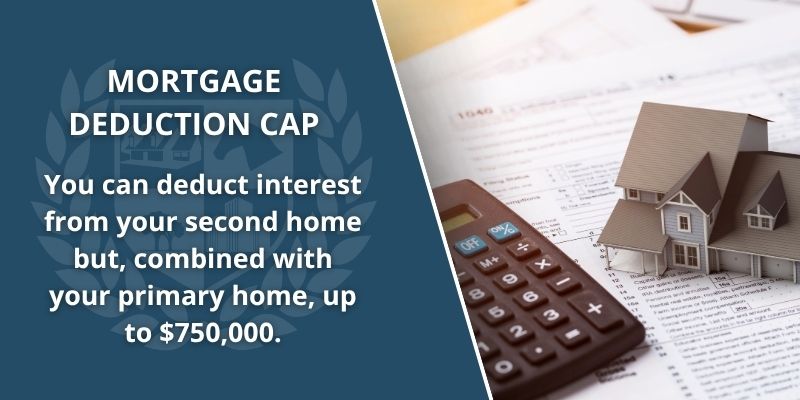
While mortgage interest can be deducted from your federal income taxes, your deduction would be limited to up to $750,000 for the combined interest costs of your primary and secondary homes. As mentioned above, you would be subject to the federal capital gains tax when you sell your second home.
Things to Consider before Buying an Investment Property in Florida
Mortgage Requirements for Investment Properties
If you’re buying a residential property as an investment in Florida, you might need an investment property mortgage rather than a standard mortgage. Investment mortgages are considered riskier than those for second homes so they would require a larger down payment of 15% to 25% or more.
Borrowers would need a credit score of up to 680 or 700, depending on the size of their down payment and other factors.
Tax Treatment of Investment Properties
With an investment property, you would list all rental income as part of your regular income on your tax returns, and your expenses in running the property could be deducted from your federal income taxes on Schedule E, up to the allowable limits.
These expenses include your mortgage interest, insurance, maintenance, management, advertising, and related expenses. You might also be able to deduct any depreciation costs. Consult with a professional tax preparer or accountant to make sure you’re following all applicable laws.
There could be local zoning restrictions and regulations on short-term rentals, such as barring them completely or requiring plans for cleaning the property and emergency repairs. If the property is part of an HOA, there could be limits on property rentals, or they may be barred completely.
Mortgage Requirements for Investment Properties
Investment Property Taxes in Florida
If you’re renting out a property in Florida on a short-term basis, such as less than six months, you will need a vacation rental license from the Florida Department of Business and Professional Regulation (DBPR) and will have to pay state sales taxes, as well as any local taxes, and obtain a business tax receipt from your county government.
Rentals lasting from 30 days to six months probably won’t require a vacation rental license, but you would still have to pay federal income taxes. Long-term rentals that last more than six months would probably not require a vacation rental license but would fall under Florida’s landlord-tenant law, which requires security deposits and tenant notifications.
Investment Property Costs and Other Issues
Property Management Needs
Regardless of how long you plan on renting out your investment property, there are other costs you’ll have to consider. If you manage the property yourself, you’ll still need someone who can handle things if you’re traveling or out of touch:
-
-
- Managing The Property: Someone to show the property to tenants, run background checks, sign leases, collect security deposits and rents, plus address any tenant concerns or issues with the property. You could also have advertising costs for promoting the property. If you plan on using a service such as Airbnb, there will be costs for using the service.
-
-
-
- Cleaning and Maintenance: Someone to make sure the place is cleaned between tenants, the property is maintained, and you have someone who can take care of any repairs or emergencies that may arise.
-
Additional Considerations for Short-Term Rentals
If you plan on making your property available for short-term rentals, there are many other things to consider, such as:
-
-
- Security and controlled access, such as using smart locks.
-
- Keeping your rental prices profitable but competitive.
- Screening all guests with background checks, or through whichever rental platform you’re using.
- How you’ll handle emergencies, such as extreme weather and power outages.
-
We Can Help You Find the Right Property for You
Whether you’re looking for a second home as a temporary residence, an investment, or something in between, we can help you find the right property in Central Florida and walk you through the entire process. Please contact a Showcase agent for information on the local real estate market, check out our featured listings online, and see our blog posts on buying a property in Florida.